automation
WhatsApp Service Message Pricing: What Changes October 1, 2026
WhatsApp service message pricing changes on October 1, 2026. See what Meta will charge, which replies stop being free, and how to cut your bot costs.
28 Aug 2026 · 9 min read · Abhijeet Singh
On this page 9 sections
If you run any kind of WhatsApp bot, WhatsApp service message pricing is about to turn into a line item you actually feel. Meta's developer documentation states that from October 1, 2026, Meta will charge on a per-message basis for service messages. For close to two years, the 24-hour customer service window has been the free lane in WhatsApp automation. That lane is closing.
This is not a rumour or a leaked roadmap. It is published on Meta's own pricing pages, alongside a second change that has already taken effect: since August 1, 2026, Meta charges all businesses for Meta Business Agent messages on a per-token basis. Meta has said it will announce and publish the specific rates that take effect on October 1, 2026 by September 1, 2026.
So you have roughly a month of warning and one month of visibility on the actual numbers before they hit. Here is what changes, what it means for the way your workflows are built, and what to fix now.
How WhatsApp billing works today
Since July 1, 2025, the WhatsApp Business Platform has charged on a per-message basis rather than per conversation. Charges apply when a template message is delivered. Templates fall into three categories: marketing, utility, and authentication.
Two things are free today, and both matter enormously to how automation gets designed:
- Free-form service messages sent inside an open 24-hour customer service window. Meta's documentation defines these as messages you can send without pre-approval, covering text, images, audio, video, documents, interactive buttons, location requests, stickers, reactions, and flows.
- Utility template messages sent inside an open customer service window. Outside the window, the same utility template is charged.
The customer service window opens when a WhatsApp user messages you or calls you, and lasts 24 hours. If the user messages again before the timer expires, the timer resets to a fresh 24 hours. Once the window closes, you can only send pre-approved templates.
There is one more free lane. If a conversation starts from a Click to WhatsApp ad or a Facebook Page call-to-action button and you respond within 24 hours, a free entry point window opens for 72 hours, and any message type sent inside it is free.
That structure created a very specific design incentive. Get the customer to message first, then do everything inside the window, and your delivery cost is effectively zero. Most well-built WhatsApp bots in the last two years were shaped by exactly that incentive.
What WhatsApp service message pricing looks like after October 1, 2026
Two changes land on the same date, and together they close both free lanes inside the 24-hour window.
First, service messages become billable. Meta's documentation is explicit that any non-template message that is not powered by Meta Business Agent is a service message, and that these will be charged at the rates that apply to utility and authentication messages in the recipient's country.
Second, utility messages sent in response to users inside an open 24-hour customer service window also become billable. The in-window discount on utility templates goes away.
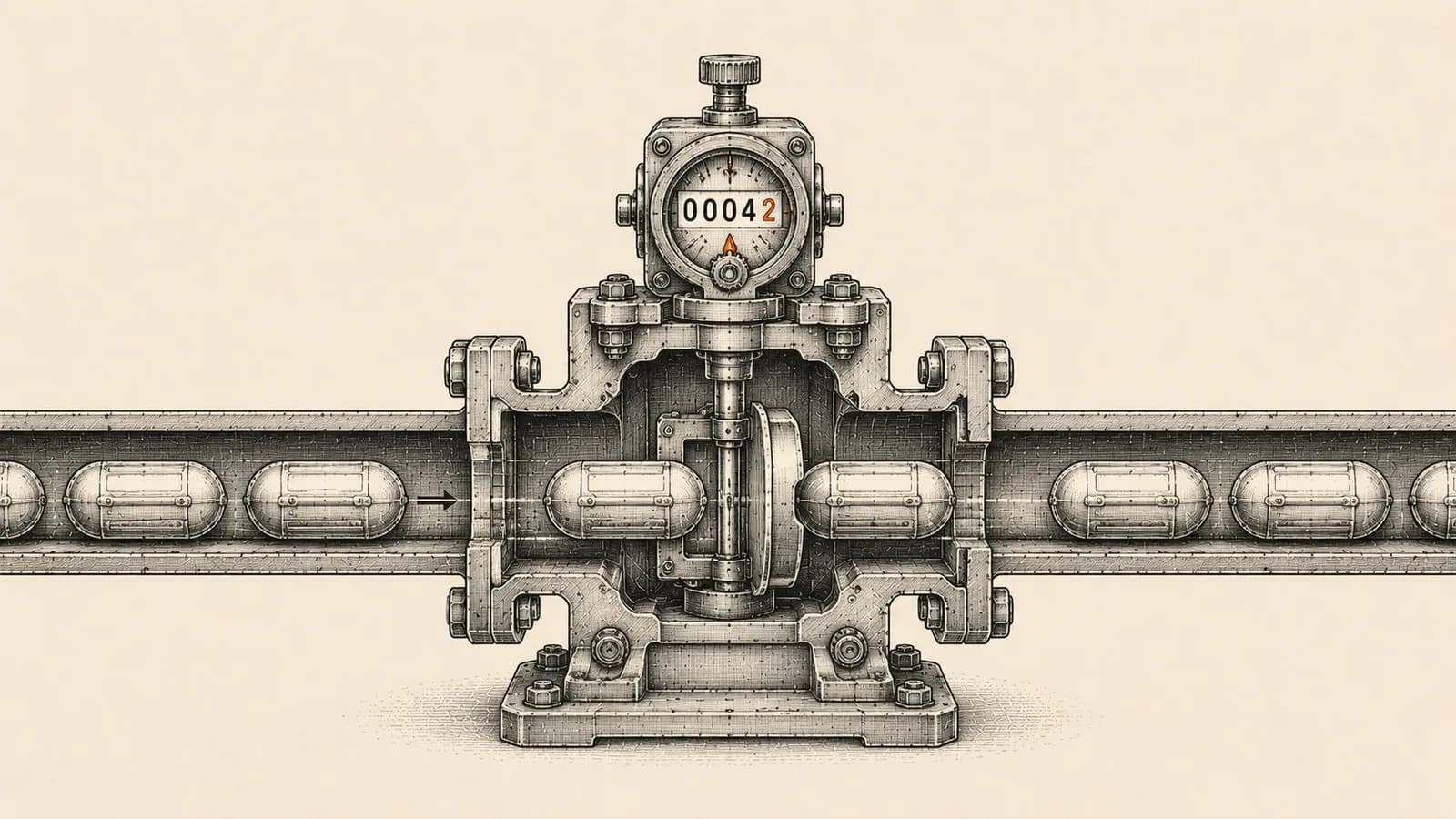
The practical translation is blunt. From October 1, 2026, essentially every message your system sends to a customer is metered, whether it is a template or a free-form reply, whether it is inside the window or outside it. The window still governs what you are allowed to send. It no longer governs what you pay.
One exemption survives. Messages sent inside the 72-hour free entry point window remain free for message delivery. Click to WhatsApp ads and Page call-to-action buttons therefore become measurably more valuable as entry points than they were last month, purely on cost grounds.
Meta Business Agent is already metered, since August 1
Meta launched the Meta Business Agent Platform on July 1, 2026, and began charging all businesses for Meta Business Agent messages on August 1, 2026. This one is not upcoming. It is live now.
The billing model is different from everything else on the platform. Meta Business Agent messages are billed per token at 2.00 US dollars per 1 million tokens, which Meta's documentation estimates at roughly 4 to 5 US cents per message. Charges reflect the tokens consumed to ingest the customer's message and to generate the response.
Meta Business Agent itself is an AI agent that acts as the primary responder in the thread. You configure it with business knowledge such as FAQs, websites and files, define skills that set tone and priorities, and connect your own APIs and webhook subscriptions so it can look up an order or book an appointment. Control can be handed off to your own application for specific events or flows. Meta lists it as available in 182 countries across automotive, consumer packaged goods, professional services, retail and ecommerce, and travel.
The cost comparison is worth sitting with. A per-token agent reply at 4 to 5 cents is not automatically cheaper or more expensive than a per-message service reply. It depends entirely on how long your messages are and how many of them you send per conversation. That is now a design decision with a price attached, not a stylistic one.
Why chatty bots get expensive
Here is the failure mode I expect to see across a lot of existing builds in October.
Many WhatsApp automations were built to feel human, which in practice means sending several short bubbles in a row. A greeting, then a clarifying question, then a menu, then a confirmation. Under the current rules that pattern is free inside the window, so nobody optimised it. Under per-message billing, a four-bubble reply costs four times a one-bubble reply and delivers the same information.
The same applies to re-prompts. A bot that does not understand an input and asks again has just doubled the cost of that turn. A menu that requires three levels of navigation costs three messages before the customer reaches anything useful.
None of this was visible when in-window delivery was free. All of it becomes visible on the first October invoice. The teams that get hurt are the ones whose conversation design was never cost-constrained, which is most teams.
Country rate cards are moving too
Separately from the service message change, Meta is moving several markets out of their regional pricing groups onto standalone rate cards on October 1, 2026.
Bangladesh, Iraq, Nepal and Sri Lanka move to lower utility and authentication rates, plus a new authentication-international rate. Kazakhstan, Kuwait, Morocco, Oman and Ukraine move to higher utility and authentication rates, plus a new authentication-international rate.
If you send to any of those markets, your unit economics change on the same day your service messages start being billed. Model those two effects together rather than separately.
How to estimate your exposure before the rates land
You do not need Meta's October rate card to size the problem. You need your own message volume, which you already have.
Pull the last 30 days of outbound messages and split them into four buckets: template messages sent outside a window, template messages sent inside a window, free-form service messages sent inside a window, and anything sent inside a 72-hour free entry point window. Today you are only paying for the first bucket. From October you pay for the first three.
Then take your current utility rate for each destination country as a stand-in and apply it to buckets two and three. That gives you a defensible upper-bound estimate this week. When Meta publishes the confirmed rates in early September, swap in the real numbers and you have a budget rather than a guess.
Do the same split by workflow, not just in aggregate. Almost always, two or three specific automations account for most of the in-window volume, and those are the ones worth redesigning.
Seven changes worth making before October 1
- Consolidate multi-bubble replies into single, well-structured messages. This is the single highest-value change and it is usually a few hours of work per workflow.
- Replace deep menu trees with interactive buttons and lists that resolve in one or two turns.
- Cut acknowledgement messages that carry no information. A bot saying "got it, one moment" is now a billable message.
- Improve intent handling so re-prompts drop. Every misunderstood input costs an extra message in each direction.
- Push more traffic through Click to WhatsApp ads and Page call-to-action buttons, because the 72-hour free entry point window still delivers messages free.
- Move low-value notifications off WhatsApp entirely. Email and in-app notifications are still free, and not everything deserves a paid channel.
- Add per-workflow message counters to your reporting so cost per conversation becomes a metric somebody owns, rather than a surprise on an invoice.
What this does not change
The 24-hour customer service window still exists and still governs permissions. You still cannot send free-form messages outside it, and you still need approved templates to reopen a conversation. Template approval, quality ratings and messaging limits are untouched by this change.
Nothing here affects the free WhatsApp Business app or the consumer WhatsApp app. This is a WhatsApp Business Platform change, so it applies if you use the API directly or through a business solution provider.
There is also a narrower policy worth knowing about if you resell AI services on the platform. Meta updated its terms on January 15, 2026 and began charging AI providers for non-template messages on February 16, 2026 in markets where it is legally required to permit them, and discontinued that charge in certain European markets on May 13, 2026. That policy targets AI providers specifically and is separate from the general business pricing above.
Where to start
The work splits cleanly into two parts. The first is measurement: instrument your existing flows so you know how many messages each conversation actually costs. The second is conversation design: rewrite the flows that send four messages where one would do.
At AbhijeetBuilts, this is the audit we are running with WhatsApp automation clients through September. We map every outbound message in a workflow, count the turns to resolution, and rebuild the ones with the worst message-to-outcome ratio, usually inside the same n8n or CRM-driven pipeline that already runs them. In most builds we look at, a third to a half of outbound in-window messages carry no information the customer needs.
If you are running WhatsApp automation at any volume and have not modelled what October 1 does to your costs, that is worth doing in the next two weeks, while there is still time to change the flows rather than just absorb the bill. Get in touch through the website and we will look at your current message volume and tell you what it will cost you.
Related resources
Keep building the automation map
Move from the guide into the services and proof pages connected to this topic.
Related services
Service
Explore WhatsApp Automation
WhatsApp automation for lead qualification, multilingual AI conversations, sales alerts, and clean CRM handoff — every enquiry answered, every conversation remembered.
Service
Explore AI Agent Development
AI agents for sales replies, lead memory, storyboard generation, data extraction, and structured automation outputs.
Service
Explore n8n Workflow Development
Custom n8n workflow automation for lead capture, CRM sync, AI enrichment, approvals, and notifications — built to keep running when nobody is watching.
Further reading
Guide
Read: WhatsApp Business API Automation in 2026: What Changed
WhatsApp Business API automation in 2026 means new rules: BSUID identity, portfolio pacing, and template pricing. Here's how to adapt your workflows.
Guide
Read: AI Voice Agents for Small Business in 2026: A Buying Framework
AI voice agents for small business reached real maturity in 2026 — here's a practical framework for evaluating cost, compliance, and platform fit.
Guide
Read: Human-in-the-Loop AI Agents: The 2026 Approval Framework
Human-in-the-loop AI agents don't need approval on every action. Here's the four-tier risk framework that keeps AI agent oversight tight in 2026.
Proof pages
Case study
See case study: Multilingual WhatsApp Sales Bot for an International Freight Forwarder
A WhatsApp AI sales assistant that qualifies freight enquiries in three languages, remembers every conversation, and alerts the sales team the moment a quote is requested.
Case study
See case study: Automated LinkedIn Outreach with AI Reply Agent
A complete LinkedIn outreach system: prospect scraping, a deliberately gradual connection ramp, post engagement, acceptance tracking, campaign messaging, and Claude-powered replies that remember every lead.